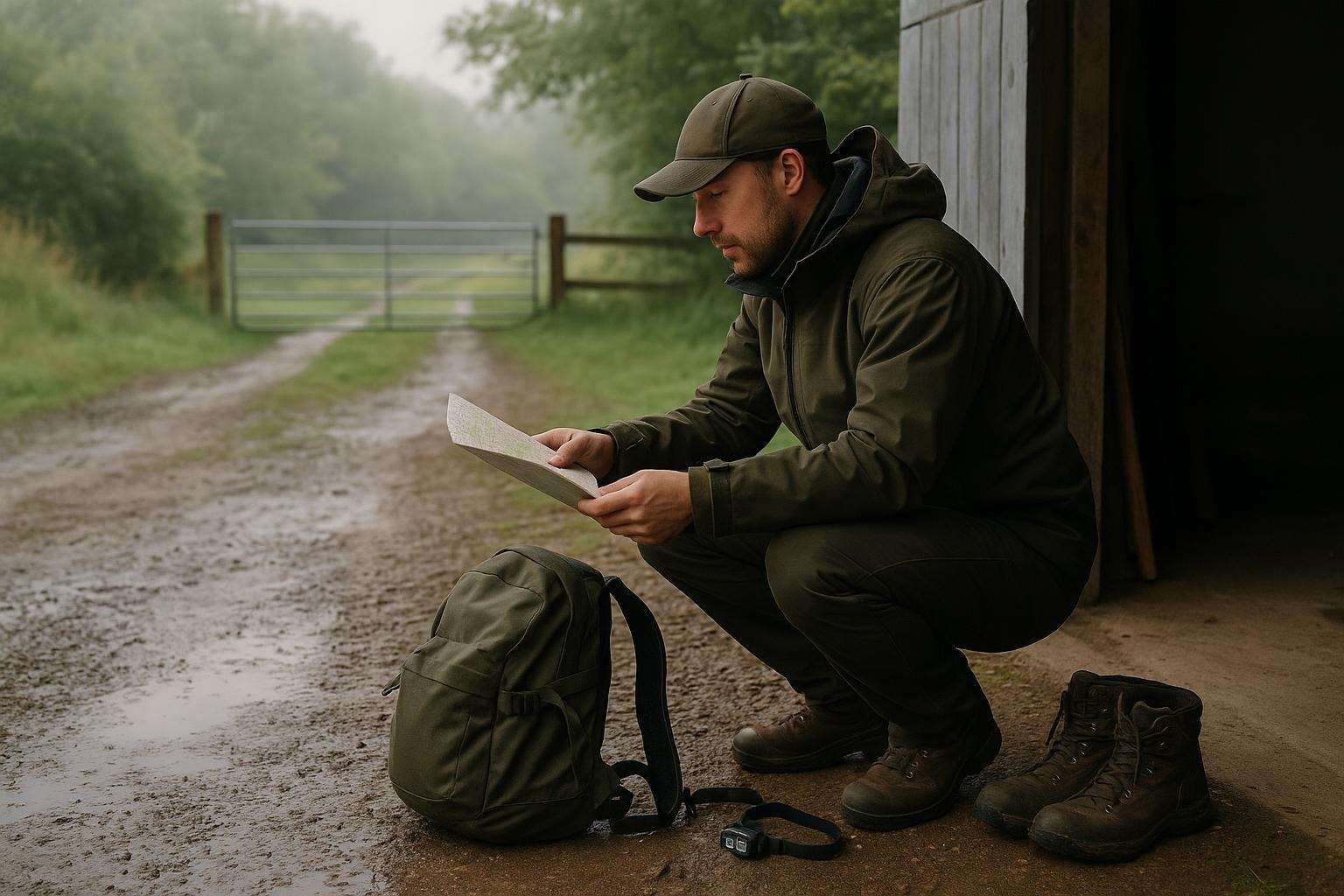
A boot lace snaps as legal shooting light approaches, the route to the stand is unfamiliar, and a phone with the rules saved on it has no signal. None of these problems is dramatic, but together they can turn a promising day into a rushed one. Good pre-season preparation is less about buying equipment than removing uncertainty: confirm the rules, inspect what you own, learn how the ground has changed and decide in advance what an ethical opportunity looks like.
Start with the rules, not the gear
Regulations should lead the hunting checklist because they determine which equipment, dates, permits, tagging steps and access arrangements matter. Requirements can change between seasons and vary by species, wildlife management area, land type or method of take. Check current guidance from the responsible wildlife authority before heading out, and keep the official information available in the field.
Do not rely on last season's screenshot, a friend's summary or an old page in the glove box. Verify season dates, legal hunting hours, license details, bag limits, reporting requirements, blaze-clothing rules, transport provisions and local restrictions. If a rule is unclear, resolve it before the hunt rather than treating uncertainty as permission.
Review access as well. Confirm that permission is current, gates and parking areas are understood, and landowner conditions are clear to everyone. A legal hunt can still become a poor neighborly decision if vehicles block a working road, livestock areas are entered without permission or a boundary is treated casually.
Scout for information, not guarantees
Scout to improve decisions without creating false confidence. Walk the property with a map and mark access points, steep or wet ground, likely bedding cover, food, water, fences and quiet approach routes. Recent tracks and trails describe use at one moment; weather, crops, hunting pressure, logging and changing water levels can alter patterns before the season opens.
Remote cameras, digital maps and aerial imagery are useful but incomplete. A camera may show timing on one trail without explaining every movement. Satellite imagery can reveal field edges and roads while hiding a fallen tree, washed-out crossing or boundary error. Use several sources, then verify details on foot where doing so will not unnecessarily disturb the area.
Ask whether you can reach a location without crossing fragile vegetation, pushing animals from cover or making noise through the drainage. A less promising position with a quiet, legal approach may be better than one requiring repeated disturbance. Mark a primary route and a simple backup, especially if rain, darkness or a closed gate could change the plan.
Give owned gear a realistic inspection
A gear check should expose failure before the field does. Inspect footwear for separated soles, damaged eyelets and worn waterproofing. Check packs, straps, rain layers, headlamps, batteries, knives and navigation tools. Test binocular focus and eyeglass compatibility. If you use a firearm or bow, follow the manufacturer's safety guidance and have the system inspected, maintained and practiced in a safe, lawful setting. Do not improvise modifications because a component feels inconvenient.
The best replacement is not always the most expensive. If a pack is comfortable, fits the load and has no safety-critical damage, repairing a buckle may be wiser than replacing it. Break in new boots before a long walk. A reliable layer that manages changing weather is preferable if a newer option is noisy, fragile or difficult to layer.
Pack for the day, not for marketing. Water, food, navigation, first-aid supplies, weather protection, a light source and communication equipment deserve priority. Carry tools needed for legal tagging, field care and safe transport, but avoid filling every pocket with equipment you have never practiced using. Unfamiliar gear adds weight without much capability.
Practice the decisions that matter
Ethical hunting requires skill and restraint. Define the conditions under which you will take a shot or pass: clear identification, a safe backstop, a responsible range, a legal target and a realistic recovery plan. Practice from the positions and in the clothing you expect to use, while following range rules and local laws. Accuracy alone does not determine whether an opportunity is responsible.
Plan what happens after a hit. Know the likely tracking and retrieval route, where you can safely handle the animal, how you will keep meat clean and cool, and whom to contact if recovery takes longer than expected. If the shot is poor or the evidence uncertain, slow down and follow lawful recovery guidance rather than immediately moving through the area.
Groups need a brief conversation before the walk. Agree on boundaries, signals, check-in times, who carries communication equipment and what happens if someone separates from the party. Clear expectations prevent confusion, especially when people have different experience levels or ideas about acceptable risk.
Leave the ground better than you found it
Conservation appears in ordinary field choices: stay on durable routes, close gates, pack out waste, avoid damaging water sources and respect non-target wildlife. Do not cut vegetation or create new trails for convenience. Repeated minor disturbance can matter in places used by livestock, other hunters or the public.
Keep notes after each outing. Record weather, access conditions, sign, equipment problems and decisions that worked or failed. These observations are more useful than a vague memory that a location "looked good." They can reveal where a plan creates unnecessary pressure on habitat or where another route would reduce disturbance.
A smooth hunting day is not one in which everything goes according to plan. It is one with enough margin for changing weather, altered animal movement, a closed route or a decision to pass. Review current regulations, inspect what you own, scout with restraint and prepare for the responsibilities that begin after the shot. Those habits support safer choices, respectful access and a season built around stewardship rather than haste.